
Lack of safe water, sanitation, and hygiene keeps millions of children —particularly in rural Malawi — out of school.
Time spent collecting water or recovering from waterborne illness disrupts learning, while the absence of decent toilets and handwashing facilities creates unhealthy and unsafe school environments, especially for girls. Without access to education, cycles of poverty continue across generations.
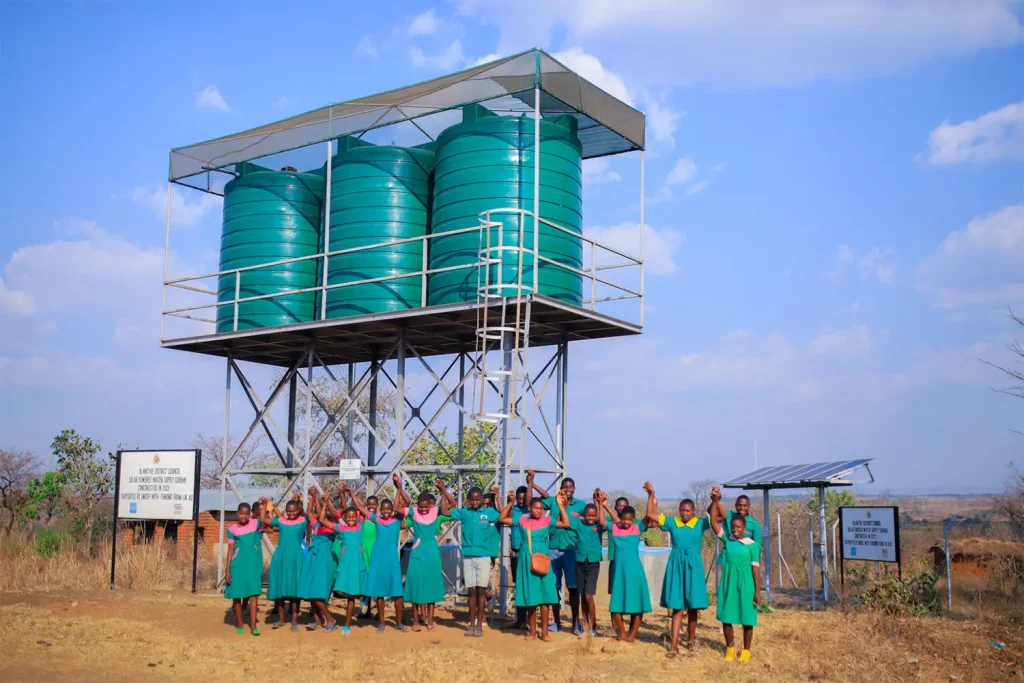
Through our partnership with Water For People, schools across Malawi are gaining reliable water supplies, improved sanitation facilities, handwashing stations, and menstrual hygiene resources.
These investments help children stay healthy and in school, while hygiene education equips students with lifelong practices they share with their families and communities.
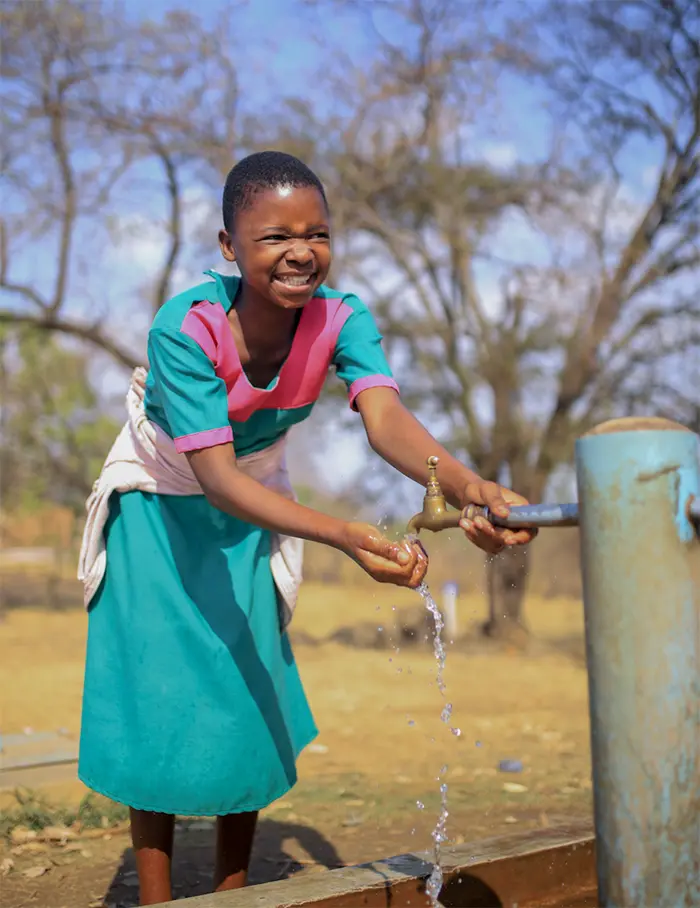
Grace, a primary school student with a physical disability, has seen the difference first-hand. Her school once relied on a heavy handpump she could not operate independently. After a solar-powered water system was installed, Grace can now access water without assistance, allowing her to focus on learning and her dream of becoming a nurse.
Her teacher, Mr. Kapira, has also noticed the change: “All of these efforts to sustain this water system have brought equality between our learners and the women in the village.”
Water and Education Statistics
- 447 million children lack basic drinking water at their school
- 427 million children lack basic sanitation services at their school
- 646 million children lack a basic hygiene service at their school
- 2 out of 5 schools provide menstrual health education
More from Grace
My name is Grace and I live in Malawi. I am 16 years old and recently completed my primary school exams. I could have already been in 9th grade but had complications from my leg. I was admitted to the hospital for weeks and ended up missing classes and exams, which is the reason why I am still in primary school.
Before the water taps were installed at school, it was hard for me to access water to clean my hands after visiting the toilet. The handpump was too heavy and the borehole was not on the school premises which made things hard for me considering my leg.
Having access to tap water has been a significant improvement for me and has allowed me to do more things on my own, giving me more independence.
My favorite subject is primary science. Interacting with nurses during my medical checkups has shown me how caring they are, and I hope I will become a nurse one day.
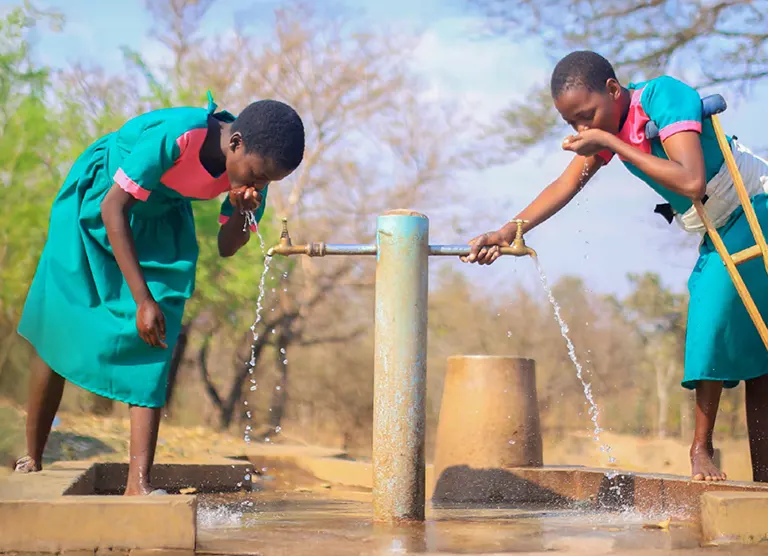
Photo credits: Water For People